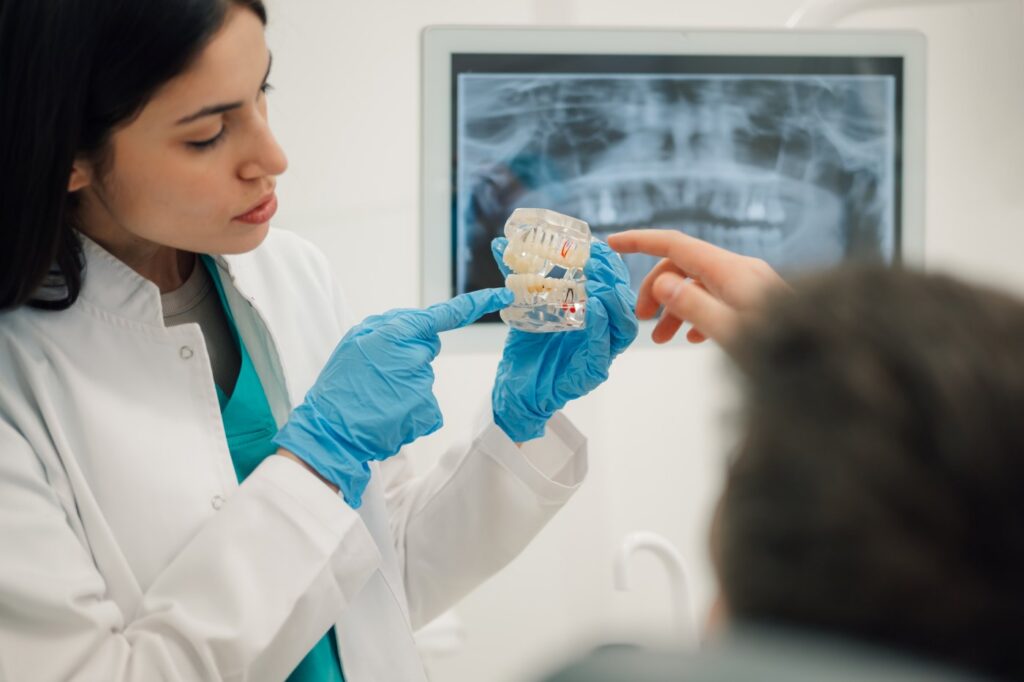
Why Is Bone Preservation Important?
After a tooth is removed, the body begins to resorb, or break down, the bone that once supported it. Without intervention, this can lead to:
- Loss of bone volume
- Changes in facial structure
- Shifting of neighboring teeth
- Complications with future restorative treatments
Bone preservation grafting helps minimize these changes and supports long-term oral stability.
The Bone Preservation Grafting Process
Bone preservation grafting is typically performed at the same appointment as your tooth extraction. Here’s what you can expect:
Tooth Extraction
Dr. Singh will carefully remove the affected tooth while minimizing trauma to the surrounding bone and tissue.
Placement of Graft Material
After the tooth is removed, bone grafting material is placed into the empty socket. This material supports new bone growth and helps maintain the natural shape of the area.
Protective Covering
In many cases, a protective membrane may be placed over the graft to support healing. The site is then closed to allow the healing process to begin.
Healing Phase
Over time, your body integrates the grafting material and forms new bone in the area. Healing timelines vary depending on individual factors and future treatment plans.
Benefits of Bone Preservation Grafting
Bone preservation grafting offers several important benefits:
- Maintains Jawbone Structure: Helps preserve the natural shape and volume of your jaw.
- Supports Future Dental Implants: Creates a stable foundation for potential implant placement.
- Prevents Shifting of Teeth: Helps maintain proper alignment of surrounding teeth.
- Enhances Long-Term Oral Health: Protects the integrity of your smile following extraction.
What Materials Are Used for Bone Grafting?
Bone grafting materials commonly used in dentistry may include:
- Natural bone-derived materials
- Synthetic graft materials
- Biocompatible substances designed to support new bone growth
Dr. Singh will discuss the most appropriate grafting material based on your specific treatment plan and oral health needs.
Is Bone Preservation Grafting Right for You?
Bone preservation grafting may be recommended if you:
- Are having a tooth extracted
- Are considering a future dental implant
- Want to maintain jawbone structure after extraction
- Wish to support long-term oral stability
During your consultation, Dr. Singh will evaluate your situation and explain whether bone preservation grafting is appropriate for your treatment goals.
Caring for Your Graft Site
After your procedure, we will provide detailed instructions to support proper healing. This may include:
- Following post-extraction care guidelines
- Avoiding pressure on the treated area
- Maintaining gentle but thorough oral hygiene
- Attending follow-up visits as recommended
Proper aftercare plays an important role in the success of the grafting procedure.
Schedule Your Consultation
If you need a tooth extraction or are planning for future restorative treatment, contact Dental Partners of Creve Coeur to schedule a consultation with Dr. Sartaj Singh. Our team is here to help protect your oral health and provide solutions designed to support your long-term smile.
Take the next step toward preserving your jawbone health today.
Frequently Asked Questions About Bone Preservation Grafting
What is bone preservation grafting and why is it done?
Bone preservation grafting, also called socket preservation, is a procedure performed immediately after a tooth extraction to prevent the jawbone from shrinking in that area. When a tooth is removed, the bone that once surrounded its root no longer receives the stimulation it needs to stay intact, and it begins to naturally resorb over the following months. Placing grafting material into the empty socket right after extraction helps maintain the bone’s shape and volume, preserving your options for future treatment and protecting the natural contours of your jaw.
Do I need a bone graft every time I have a tooth extracted?
Not necessarily. Whether a bone graft is recommended depends on where the tooth is located, your future treatment plans, and the condition of the surrounding bone. It’s most commonly recommended when there’s a realistic plan to place a dental implant down the road, since implants require adequate bone density to integrate successfully. For teeth in less critical positions or when implants aren’t being considered, a graft may not be needed. Dr. Singh will evaluate your specific situation and explain his recommendation clearly before anything is done.
What happens if I don’t get a bone graft after an extraction?
Without grafting, the bone in the extraction site gradually resorbs over the months following removal. This can result in a visible indentation in the gum, shifting of neighboring teeth into the gap, changes to your facial structure over time, and insufficient bone volume to support a dental implant if you decide to pursue one later. The longer a tooth is missing without a graft or replacement, the more bone is typically lost. Bone preservation is significantly easier than trying to rebuild bone volume after the fact.
What is the grafting procedure like?
Bone preservation grafting is performed at the same appointment as your tooth extraction, so there’s no need for a separate surgical visit. After Dr. Singh removes the tooth, he carefully places biocompatible grafting material into the empty socket. A protective membrane is often placed over the graft to help contain the material and support healing, and the site is closed. The procedure adds only a short amount of time to the extraction appointment and is done under the same local anesthesia used for the extraction itself.
Is a bone graft painful?
The graft is placed while the area is still fully numb from the extraction, so you won’t feel any additional discomfort during the procedure itself. Afterward, the recovery is similar to a standard extraction. some soreness, swelling, and sensitivity for a few days that is managed comfortably with over-the-counter or prescribed pain relief. Dr. Singh provides detailed aftercare instructions and follows up after the procedure to make sure healing is going well.
How long does it take for the graft to heal?
The graft material gradually integrates with the surrounding bone over a period of several months, typically three to six months depending on the individual and the size of the extraction site. During this time, your body replaces the graft material with new bone tissue. Dr. Singh will monitor the healing process at follow-up visits and, if an implant is planned, will use imaging to confirm that sufficient bone has formed before proceeding with placement.
What materials are used in bone preservation grafts?
Several types of biocompatible grafting materials are used in dentistry, including materials derived from natural bone sources, synthetic options, and combinations of both. All are designed to be well-tolerated by the body and to support the natural process of new bone formation. Dr. Singh will discuss the specific material he recommends for your case at your consultation, taking into account your health, the location of the extraction, and your treatment goals.
Is bone preservation grafting covered by dental insurance?
Coverage for bone grafting varies by plan. Some dental insurance policies include partial coverage for socket preservation when it’s performed in conjunction with a documented extraction, particularly when future implant placement is part of the treatment plan. Others classify it as a separate surgical procedure with different benefit tiers. Medical insurance can occasionally apply if the extraction is related to a medical condition. Call our office at (314) 432-0960 before your appointment and our team will verify your benefits and help you understand your coverage before treatment begins.